


CLL HEALTH Integrated Model of Care
Core Philosophy
CLL HEALTH Integrated Model of Care is anchored in a Client-Centred Culture of Caring (4Cs) delivered through Population Health-Oriented Integrated Care to ensure a betterment in the health, well-being, and longevity of the people we serve.
It is underpinned by a culture of RESPECT which is the core value of CLL HEALTH:
Core Value — RESPECT
Respect
We honour every life with dignity, humility, and cultural understanding—valuing each individual as unique.
Empathy
We care with heart and understanding—seeing beyond illness to the person.
Safety
We protect life through uncompromising safety standards—caring for patients and safeguarding those who serve.
Professional Excellence
We pursue excellence with discipline, knowledge, skills, and continuous learning and improvement.
Ethics and Integrity
We act with integrity, honesty, and accountability.
Client-Centred Culture of Caring (4Cs)
We place patients, families, and communities at the heart of every care decision.
Teamwork
We work as ONE—integrating diverse talents to deliver the best outcomes.
“At CLL HEALTH, RESPECT is not just what we believe — it is how we care, how we lead, and
how we transform lives together.”
CLL Integrated Delivery Network (IDN)
Care, education, research, and innovation are fully integrated across clinical and non-clinical services through a multi-dimensional model of horizontal, vertical, and diagonal integration, powered by a unified digital environment to deliver a connected, adaptive, and future-ready health system.
Strategic Aim
To deliver better outcomes, enhanced experience, and sustainable value-based care by building a digitally enabled integrated care system.
Core Components
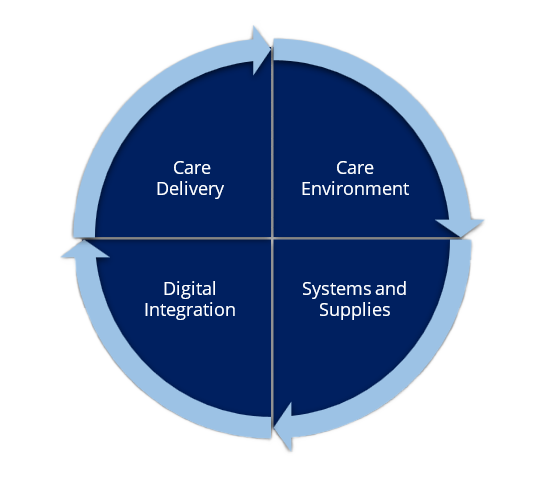
Care Delivery
Key Elements
- Coordinated, Patient-Partnered Care
Care is delivered through integrated teamwork and continuous communication, with patients and families actively engaged as partners in care. - Whole-Person, Life-Course Care
Care addresses physical, psychological, social, and functional needs across the life course, from prevention to complex and long-term care. - Seamless Care Across the Continuum
Clinical and non-clinical services are connected through structured pathways and enabling systems to ensure continuity and coordination of care. - Evidence-Based Practice and Workforce Excellence
Care is guided by clinical evidence and decision support, and delivered by a highly skilled workforce strengthened through continuous learning. - Proactive Population Health and Health Literacy
Care extends beyond treatment to prevention, risk stratification and patient empowerment, enabling individuals and communities to improve their own health.
Care Environment
Key Elements
- Consistent, Patient-Centred Care Experience
A standardised yet adaptive care environment ensures respect, dignity, and trust in every interaction. - Behavioural Alignment to Organisational Values
Organisational values are operationalised into consistent, observable behaviours across all care settings, enabled by structured feedback and performance management systems. - “No Wrong Door” with Structured Navigation
All entry points are supported by clear triage and navigation mechanisms to ensure timely access to appropriate care. - Patient Safety and Rights as Non-Negotiable Standards
Care is delivered within a robust safety framework, including protocols, incident reporting and continuous monitoring. - Reliable, High-Quality Service Delivery
All clinical and non-clinical service execution processes are standardised to ensure consistency, efficiency and proficiency in delivering the highest level of client experience.
Systems and Supplies
Key Elements
- Adaptive and Resilient Care Infrastructure
Care facilities, designed to industry standards, are adaptable to evolving needs and emerging technologies. - Integrated Care Ecosystem
A robust and well-orchestrated ecosystem enables the advancement of integrated care delivery. - Technology-Enabled Diagnostic and Therapeutic Capabilities
Advanced diagnostic and therapeutic technologies are embedded to support timely, precise clinical decision-making for improved outcomes. - Intelligent Supply Systems
Medical and pharmaceutical supplies are ensured through standardised, responsive, and data-informed systems that support safe and uninterrupted care delivery. - Continuous System Optimisation and Innovation
Infrastructure, technologies, and operations are continuously enhanced through performance insights and innovation.
Digital Integration
Key Elements
- Unified Digital Health Environment
A single interoperable environment integrates clinical, operational and administrative systems, enabling a “One System, One Team” experience across the whole integrated health system. - Interoperability and Data Integration Architecture
A standards-based architecture enables secure, real-time data exchange across systems, partners and care settings. - Clinical and Operational Intelligence
Advanced analytics and decision support systems enable evidence-based care, population health management and performance improvement. - Client-Centric Digital Engagement and Access
Digital solutions enable accessible, transparent, and personalised client interactions across the care journey. - Scalable, Secure, and Adaptive Digital Infrastructure
A resilient and scalable digital infrastructure is designed to ensure strong cybersecurity, data privacy and adaptability to frontier technologies.
Ratified by the Council for Integrated Healthcare Advancement (CIHA) on 6 October 2026.
Share